The glow of a laptop screen at 3 AM has become the unofficial mascot of the modern university experience. In dorm rooms from Sydney to London, a silent war is being waged between the biological necessity of sleep and the relentless pursuit of a competitive Cumulative GPA. For decades, the “grind culture” of higher education has treated sleep deprivation as a badge of honor—a physical manifestation of a student’s dedication. However, as the modern university system becomes increasingly complex and the cognitive load on students reaches an all-time high, we have to ask: is the “all-nighter” actually sabotaging the very grades it’s meant to protect?
The relationship between sleep quality and academic performance is governed by a delicate biological clock known as the circadian rhythm. When this rhythm is disrupted by erratic study schedules, the brain’s ability to move information from short-term to long-term memory is severely compromised. Many students realize that balancing high-level research with physical wellness is nearly impossible alone, which is why seeking professional help with assignment tasks through myassignmenthelp has become a strategic move to preserve mental agility and sleep duration. By delegating the most time-consuming structural frameworks, students can protect their Pittsburgh Sleep Quality Index (PSQI) scores without sacrificing the quality of their scholarly success.
The Cognitive Cost of the All-Nighter
Science suggests that pulling an all-nighter results in cognitive impairment similar to being legally intoxicated. Memory retention and decision-making are the first functions to slide when sleep duration drops below the recommended seven hours. During Rapid Eye Movement (REM) sleep, the brain actively “prunes” irrelevant information while strengthening the neural pathways associated with the complex theories learned during the day. Without this recovery period, the modern university student experiences a phenomenon known as “brain fog,” where focus and attentiveness diminish, making the next day’s lectures nearly impossible to digest. The pressure is even more intense for those in technical fields where precision is non-negotiable. For instance, a student struggling with complex spatial design might seek architecture assignment help to ensure their technical drawings meet rigorous standards while they catch up on much-needed rest.
1. The Circadian Rhythm: Your Brain’s Hidden Grading Scale
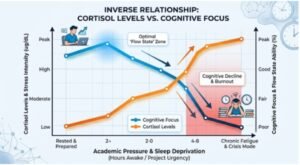
The modern university system often ignores the reality of human biology. Your circadian rhythm is an internal 24-hour clock that regulates alertness and sleepiness. When students stay up until dawn to finish a literature review, they aren’t just “tired”—they are experiencing a form of social jetlag. This misalignment increases levels of cortisol, the stress hormone, which has a direct negative impact on academic performance and emotional regulation. When your cortisol levels are permanently spiked, your ability to handle “Sunday Scaries” or acute academic procrastination vanishes. Instead of entering a “flow state” during exams, the brain stays in a survival mode that prioritizes immediate stressors over complex problem-solving. This is why sleep hygiene is not just a lifestyle choice; it is a fundamental pillar of cognitive function.
2. The Science of Memory Consolidation
To understand why a lack of sleep kills your GPA, we have to look at how the brain processes a day’s worth of lectures. Memory consolidation happens primarily during sleep. This is a three-step process: encoding, consolidation, and retrieval. While you encode information while awake, the “consolidation” phase—where that information becomes a stable long-term memory—requires the specific neurochemical environment of a sleeping brain.
| Sleep Stage | Function for Students | Impact on Academic Performance |
| Light Sleep (N1 & N2) | Initial processing | Helps with basic fact recognition. |
| Deep Sleep (SWS) | Declarative memory | Crucial for remembering dates, formulas, and facts. |
| REM Sleep | Procedural & Emotional memory | Vital for complex problem solving and creative writing. |
| Sleep Deprivation | Cortisol buildup | Leads to “brain fog” and high error rates in assignments. |
Export to Sheets
3. Decoding Sleep Hygiene for the High-Pressure Student
Sleep hygiene refers to the habits and environmental factors that precede a high-quality rest period. For a student living in a high-pressure environment, this goes beyond just “sleeping more.” It involves creating a ritual that signals to the brain that the academic day is over.
- Digital Sabbaticals: The blue light from smartphones inhibits the production of melatonin. Turning off devices 30 minutes before bed can significantly improve sleep quality.
- Consistency over Quantity: Going to bed and waking up at the same time every day—even on weekends—does more for your GPA than a twelve-hour sleep marathon on a Saturday.
- The Sleep Environment: Your desk should be for work, and your bed should be for rest. Mixing the two creates a psychological “choice paralysis” where your brain doesn’t know whether to focus or fade out.
4. The “Grindset” vs. Strategic Delegation
There is a growing movement toward “Digital Minimalism” in education. Students are beginning to realize that doing everything themselves at the cost of their health is a failing strategy. In the professional world, leaders are praised for their ability to delegate. In the modern university system, students should be encouraged to use the same logic. Strategic delegation—whether it’s using research assistance for a complex thesis or utilizing data-gathering tools—allows a student to maintain their mental agility. If you are spending twenty hours a week on formatting and citations, you are losing twenty hours of high-value cognitive recovery. By offloading the mechanical aspects of assignments, you free up the mental space required for deep learning and memory retention.
5. Managing the “Academic Workload” Matrix
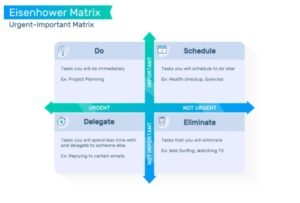
High-achieving students often struggle because they treat every task as a high-priority emergency. This leads to chronic stress and late-night cramming sessions. By using a prioritization matrix, students can identify which tasks require their peak cognitive hours and which can be managed through external support or simplified methods.
Explore
- Urgent & Important: Upcoming exams, major project deadlines. (Do these during your peak alertness hours).
- Important but Not Urgent: Long-term research, thesis planning. (Schedule these for mid-day).
- Urgent but Not Important: Formatting bibliographies, minor data entry. (Delegate or use automated tools here).
- Neither: Excessive social media scrolling, “busy work.” (Eliminate to protect sleep).
6. The Long-Term Impact of Chronic Sleep Debt
Sleep debt is cumulative. If you lose two hours of sleep every night for a week, by Friday, your brain is functioning as if you haven’t slept for a full twenty-four hours. This debt cannot be “repaid” simply by sleeping in on Sunday. For the modern university student, chronic sleep debt leads to a weakened immune system, increased risk of anxiety, and a significant drop in scholarly success. In 2026, the academic landscape is more competitive than ever. However, the students who are reaching the top aren’t the ones staying up the latest; they are the ones who have mastered the art of “Deep Work.” Deep Work requires a refreshed, oxygenated, and well-rested brain. When you prioritize sleep, your efficiency increases so much that you actually have more free time than the student who spends all night struggling through a single paragraph.
7. Reclaiming Your Time and Your Health
Can you really have both a high GPA and good sleep hygiene? The answer is a resounding yes, but it requires a total rejection of the “burnout as success” narrative. Achieving scholarly success isn’t about who stays in the library the longest; it’s about who manages their energy the most efficiently. When you prioritize your circadian rhythm, you find that you can accomplish in four hours of “Deep Work” what used to take you eight hours of exhausted “Pseudo-Work.” This efficiency is the true secret to surviving the modern university system. It’s about working with your brain’s natural cycles rather than fighting against them.
8. Practical Steps to Transition
If you are currently trapped in a cycle of late-night assignments and morning exhaustion, start small:
- Audit your workload: Identify which assignments are draining your time without adding to your learning.
- Set a “Hard Stop”: Decide that no matter what, the laptop closes at 11 PM.
- Optimize your environment: Use blackout curtains and keep your room at a cool 18°C.
- Seek Support: Don’t be afraid to use specialized services for technical or repetitive tasks to ensure you meet your deadlines without compromising your health.
9. Final Thoughts: The Future of Academic Success
As we move further into a hyper-automated world, the value of human-synthesized research and critical thinking will only increase. To produce this high-level work, your brain needs to be at its peak. Sleep is the fuel for that peak performance. By integrating better sleep hygiene habits and knowing when to utilize professional support for your workload, you can bridge the gap between wellness and achievement. Don’t let your GPA become a graveyard for your physical health. Start treating your rest as the most important “assignment” on your syllabus, and watch how the rest of your academic life falls into place. The modern university system is a marathon, not a sprint. To finish strong, you need to make sure you aren’t running on empty.
Summary of Key Takeaways:
- Memory Retention: Sleep is where learning becomes permanent.
- Strategic Support: Using resources like myassignmenthelp can reduce cognitive load and protect your health.
- Consistency: A stable sleep schedule is more effective than “catching up” on weekends.
- Delegation: High-achievers know when to seek assistance to maintain their focus and attentiveness.
Frequently Asked Questions
How does sleep impact long-term memory retention?
During sleep, the brain undergoes a process called consolidation, where it stabilizes and strengthens information gathered throughout the day. Without sufficient rest, the neural pathways required to recall complex academic theories remain weak, leading to poor performance during exams.
Can “catching up” on sleep during the weekend fix a low GPA?
While extra rest helps reduce immediate exhaustion, it cannot reverse the cognitive damage caused by a week of sleep deprivation. Consistency is more effective for academic success, as erratic sleep patterns disrupt the circadian rhythm and lower overall mental focus.
Why do all-nighters often lead to lower grades?
Staying awake for 24 hours creates cognitive impairments similar to legal intoxication. This leads to a higher frequency of errors, reduced critical thinking abilities, and an inability to handle complex problem-solving, which outweighs any benefit gained from extra study hours.
What are the most effective ways to improve sleep hygiene?
Creating a dedicated rest environment and establishing a “digital sabbatical” before bed are essential steps. Reducing blue light exposure and maintaining a cool room temperature helps the body transition into deep sleep stages, ensuring the brain is refreshed for the next day’s workload.
About The Author
Cooper Robinson is a lead academic strategist and researcher at myassignmenthelp, where he specializes in developing high-performance study frameworks for the modern student. With a focus on cognitive efficiency and student wellness, he provides expert insights that help scholars navigate the complexities of higher education.